Tuesday, March 30, 2021

NLRB Slaps Back Elon Musk for Union Busting Tweet

Tesla landed itself back in the news last week for yet another dose of negative publicity, courtesy of the quick-tweeting trigger finger of its CEO, Elon Musk. This time, the National Labor Relations Board (“NLRB”) found Musk to have threatened employees with a loss of stock options if they chose to be represented by the United Auto Workers labor union. The 2018 tweet in question read: “Nothing stopping Tesla team at our car plant from voting union. Could do so tmrw if they wanted. But why pay union dues and give up stock options for nothing? Our safety record is 2X better than when plant was UAW & everybody already gets healthcare.”

Musk’s social media usage has already gotten Tesla into tens of millions of dollars of trouble. His tweet that he was considering taking Tesla private led to artificial investment in Tesla stock, even though the tweet had no basis in fact. The Securities and Exchange Commission fined him and Tesla each $20 million. Musk later said the penalty was “worth it,” speaking volumes about the weakness of the regulatory scheme that is meant to protect against the ultra-wealthy’s abuses of power.

Last week’s NLRB decision represents another agency’s attempt to rein in Musk’s unlawful social media posts. The NLRB ordered Musk and Tesla to stop threatening employees for supporting labor efforts, delete the tweet, place a notice regarding unfair labor practices at the Fremont plant, and place notices about the tweet in all Tesla facilities nationwide. The NLRB decision also reinstated with backpay a Tesla employee who was wrongfully terminated in retaliation for his union activities. Neither Tesla nor Musk will be faced with any penalties other than the employee’s backpay.

Bryan Schwartz Law is no stranger to Tesla and Musk’s unlawful workplace ethos. Since 2017, BSL has been litigating a case against Tesla concerning appalling race harassment at its Fremont factory. The NLRB decision is a positive development for workers, hopefully the start of many changes at the Tesla workplace to protect employees from abuses.

If you have experienced retaliation or discrimination at Tesla, contact Bryan Schwartz Law.

Friday, March 5, 2021

Whistleblower Victory Means Public Entities are Subject to PAGA - Sargent v. Board of Trustees


The Court of Appeal today certified for partial publication (hopefully soon to be full publication)
 Sargent v. Board of Trustees of CSU, a case led by Collier Law Firm (Bryan Schwartz Law's co-counsel) with amicus support from Bryan Schwartz Law writing on behalf of the California Employment Lawyers Association.

In Sargent, the Court of Appeal held unequivocally that aggrieved public employees can bring some PAGA claims against their employers - in particular, PAGA claims derived from Labor Code sections that provide for civil penalties (i.e., as opposed to those where only PAGA default penalties would be implicated). Government entities have argued that PAGA categorically does not apply to them - with some success at the the trial court level - but this decision should put that argument to rest. The Court relied on Kim v. Reins' holding that an employee has standing to bring PAGA claims when he/she was aggrieved by at least one claim personally - even if he/she did not personally experience all the violations.
  
Plaintiff Sargent blew the whistle on health/safety violations at the CSU, involving asbestos and other hazardous materials. He promptly received six written reprimands and ultimately was constructively discharged. The jury found cat's paw liability, under Reeves v. Safeway (CACI 2511), after the trial court sustained some of plaintiff's important evidentiary objections - which the Court of Appeal upheld. 

The Collier Law Firm fought thousands of hours in the trenches to prevail in the underlying jury verdict (the docket ran 167 pages, as the Court of Appeal pointed out). Though the plaintiff's underlying award will be modest, the Court of Appeal upheld a $7.8M fee award resulting from Defendant's scorched-earth litigation tactics, plus a well-deserved 2.0 lodestar fee multiplier. The Court rejected apportionment between successful/unsuccessful claims, and held that fees were supported under public-benefit theory, CCP 1021.5 (and did not reverse the trial court's finding that they were appropriate also under catalyst theory).  Importantly, the Court of Appeal rejected CSU's argument that CSU should not have to pay such a fee multiplier because the defendant is a public entity.

Sargent serves as a cautionary tale to defendants who fight with scorched-earth litigation tactics. The Court of Appeal cited defense counsel's billed hours and number of attorneys staffed on the file, as evidence that plaintiffs' counsel's billing was not excessive and that plaintiff's fees were reasonable. The Court upheld the award even though it reversed all the PAGA penalties that were awarded to the plaintiff (because they were not based upon PAGA penalties for Labor Code violations of sections with their own penalty provisions).

Bryan Schwartz Law congratulates the Collier Law Firm and all those who worked to win the important Sargent precedent.

Friday, February 26, 2021

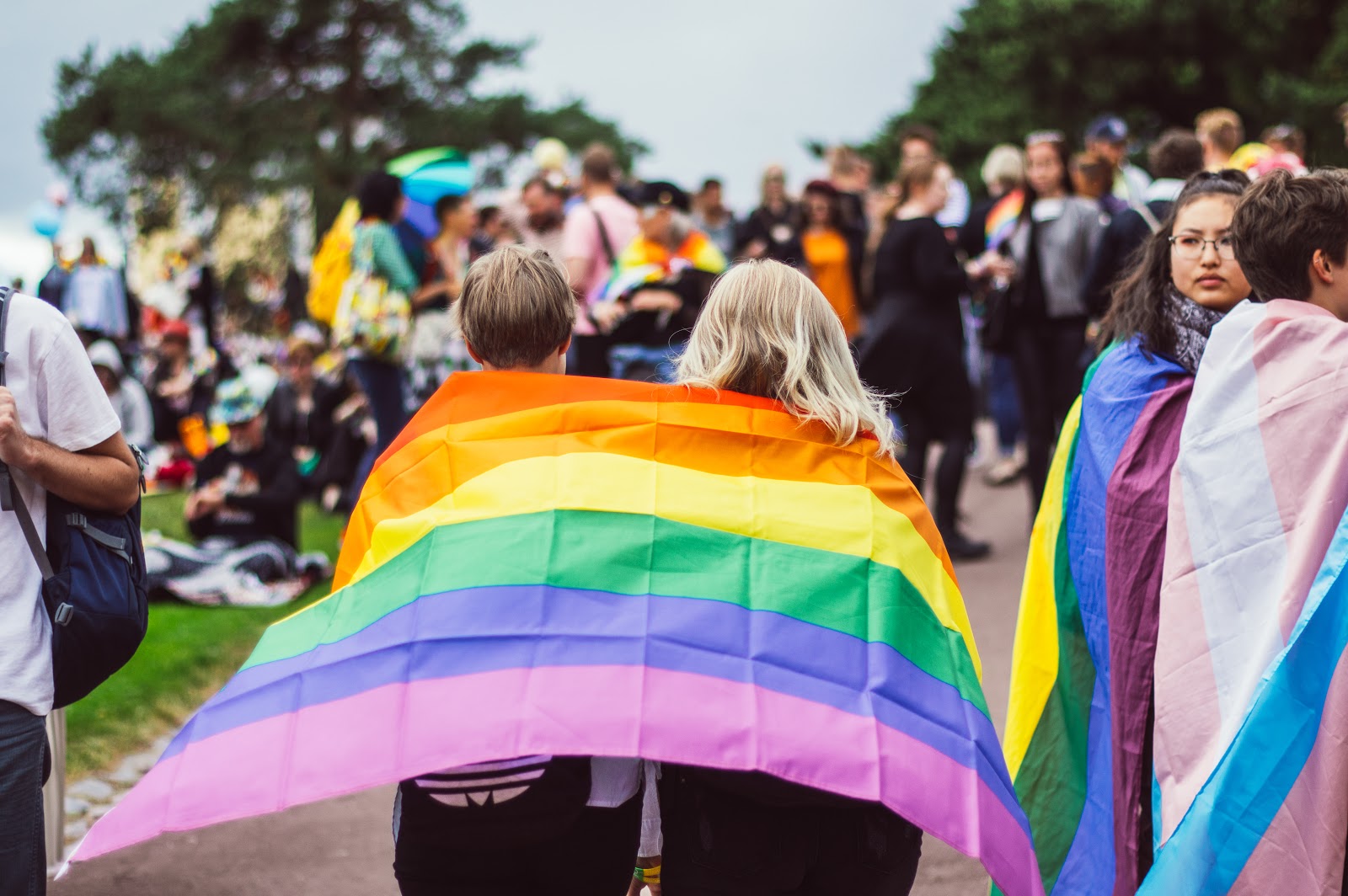
Promising Developments for LGBTQ Workers

After four years under a President who did everything in his power to strip LGBTQ people of their rights, things are finally looking up for LGBTQ workers. On his first day in office, President Biden issued an Executive Order instructing his administration to vigorously enforce the federal anti-discrimination laws which prohibit discrimination on the basis of sexual orientation and gender identity. And this week, the House of Representatives voted to pass the Equality Act, which would amend the Civil Rights Act of 1964 to explicitly encompass protections for gay, lesbian, bisexual, transgender, and queer people.


Biden’s Executive Order requires federal agencies to follow the landmark Supreme Court decision in Bostock v. Clayton County, which Bryan Schwartz Law has written about before. The Court in Bostock interpreted Title VII’s prohibition on discrimination “because of sex” to encompass discrimination based on sexual orientation and gender identity. It held, “An employer who fires an individual merely for being gay or transgender violates Title VII.Bostock v. Clayton Cty., Georgia, 140 S. Ct. 1731, 1734 (2020). The Court reasoned that it is impossible for an employer to discriminate against employees based on sexual orientation without discriminating against them on the basis of sex. Id. at 1741. Justice Gorsuch provided the example of a man being fired because he was married to a man, whereas a woman would not have been fired for being married to a man. Id. Therefore, because men and women are treated differently, there exists sex discrimination in this scenario. Id.


At the end of his presidency, in January, Trump’s Justice Department issued a last-minute memo seeking to limit the scope of Bostock’s applicability. Thankfully, Biden both revoked the memo and explicitly instructed his administration to interpret Bostock broadly in his Executive Order. In adopting a broad construction of Bostock, the Executive Order says loudly that the Biden administration will consider discrimination on the basis sexual orientation and gender identity to be a form of sex discrimination, prohibited by Title VII. This is an encouraging development, but because it is an Executive Order rather than legislation, it leaves open the possibility that future presidents could take steps backward again, like Trump did.


This is where the Equality Act comes in. Instead of including protections for LGBTQ people under the umbrella of “sex discrimination,” the Equality Act would Amend the Civil Rights Act of 1964 to add “sexual orientation and gender identity” as their own bases for protection under the Act. Currently, these bases are race, color, religion, sex, and national origin. The Equality Act would replace the word, “sex,” from the Act with, “sex (including sexual orientation and gender identity).” The Civil Rights Act of 1964 is one of the greatest sources of protection for American workers, with Title VII of the Act prohibiting employment discrimination nationwide. The Equality Act would therefore expand these meaningful protections for American workers to explicitly encompass members of the LGBTQ community. 


It is important to pass federal protections for LGBTQ workers because currently, 27 states have no state-level laws prohibiting discrimination based on sexual orientation or gender identity.  Further, passing the Equality Act would ensure federal-level protection from discrimination even in the unfortunate case that we end up with another President who does not support LGBTQ workers. It is crucial that we do not leave this important civil rights issue up to the whims of a bigoted future President.


Thanks to decades of hard work by LGBTQ advocacy groups, the House of Representatives voted to pass the Equality Act on February 24, 2021. Hopefully the Senate will look past partisan divides and vote this Act into law swiftly.


Bryan Schwartz Law stands with LGBTQ workers. The firm has written about Title VII many times before. If you believe you have been discriminated against based on your sexual orientation or gender identity, please contact Bryan Schwartz Law.

Friday, January 29, 2021

California Supreme Court Expands Number of Workers Classified as Employees Rather Than Independent Contractors

The 2020 presidential election successfully ousted an administration and political movement that has sought to undermine workplace protections, and reaffirmed democracy and the rule of law.

But it also saw the overwhelming passage of Proposition 22 in California after gig employers spent a jaw-dropping $200,000,000+

(the most in California history) to write its own law, much to the dismay of worker advocates and to the detriment of gig economy workers. Proposition 22 exempts app-based rideshare and delivery com
panies from their responsibilities under landmark worker protection law A.B. 5 and the Supreme Court of California’s decision in Dynamex Operations W. v. Superior Court (2018) 4 Cal.5th 903, which classify drivers as employees.

Good news for workers came early in 2021: the California Supreme Court has determined that the Dynamex decision applies retroactively to cases that arose before Dynamex was decided in 2018. The decision is Vazquez v. Jan-Pro Financing International, Inc.

Dynamex established the “ABC test,” a three-part legal test that makes it more difficult for businesses to ignore worker protections by classifying them as independent contractors. Under the ABC Test, a business can classify a worker as an independent contractor only if the employer can show all three parts:

A)      The person is free from the control and direction of the hiring entity in connection with the performance of the work;

B)      The person performs work that is outside the usual course of the hiring entity’s business; and

C)      The person is customarily engaged in an independently established trade, occupation, or business of the same nature as that involved in the work performed.

If the business cannot prove all three of these parts, the worker is an employee. Unlike independent contractors, employees are guaranteed protections like sick leave, minimum wage, overtime pay, reimbursement for their expenses, health insurance, and the right to organize. Gig employers such as Uber, Lyft, Doordash, and Postmates hoped to avoid these legal obligations  to their workers by bankrolling Proposition 22—which is why its passage was such a stinging defeat for gig workers.

A three-judge panel of the Ninth Circuit Court of Appeals had already held that the ABC test applies retroactively in May 2019, but that did not end the debate. On rehearing, the Ninth Circuit decided to ask the California Supreme Court what it thought and withdrew its opinion. In a victory for workers, the California Supreme Court unanimously held on January 14, 2021, that the Dynamex decision should apply retroactively to cases arising before it was decided.

Judicial decisions like Dynamex usually apply retroactively, but the defendant here argued that Dynamex should be an exception because the ABC test was, in their view, a new rule. As such, according to the defendant, it would not be fair to apply Dynamex retroactively. The court disagreed, opining that decisions prior to Dynamex had put hiring entities on notice that the previous state of the law regarding independent contractor status was not firmly settled. To the contrary, the court stated that “fairness and policy considerations underlying our decision in Dynamex favor retroactive application,” because workers’ protections enable “them to provide at least minimally for themselves and their families and to accord them a modicum of dignity and self-respect.” If Dynamex were not applied retroactively, the court feared that many workers would be denied the intended protections of California law.

Though this is a victory, it is a limited one. Statutes of limitations already restrict the number of workers who may assert their rights as employees improperly misclassified as independent contractors. However, Proposition 22 does not apply retroactively, meaning that gig workers have a window in which to exercise their legal rights in light of this decision.

If you have wrongly classified as an independent contractor instead of an employee, contact Bryan Schwartz Law.

Wednesday, December 30, 2020

Tackling Sex Discrimination in Big Tech: Pinterest and Beyond


The tech industry has a sex discrimination problem. It’s no secret. Like much of the white-collar workforce,
men dominate the tech sector. Women hold less than 20% of the technical jobs at some of the largest tech giants. As of 2019, only about 11% of women in tech held supervisory roles. Tech-employed women are paid less than their male counterparts, the subject of (for example) a certified class action against Oracle.

The dearth of women in tech has negative implications for consumers and society at large. Many tech products are designed with men in mind, such as smartphones too large for the average woman’s hands, voice recognition software that understands men better than women, and fitness trackers that don’t count steps while performing household chores or pushing a stroller. Software and artificial intelligence have repeatedly been shown to exhibit race and sex bias.

The male-dominated tech industry has proven resistant to addressing the field’s bias and its wider implications. For instance, Google terminated (it would say “accepted the resignation of”) Timnit Gebru, an Ethiopian-born engineer, after she declined to retract an academic research paper examining the bias risks of Google’s artificial intelligence concerning languages (implicating, for example, predictive text).

One large tech company that came under fire for sex bias, Pinterest (a platform with a predominantly female user base), settled a sex discrimination lawsuit filed by former chief operating officer Francoise Brougher for $22.5 million. Ms. Brougher’s settlement, achieved by Rudy Exelrod Zieff & Lowe, represents a major victory for marginalized women in the tech world. Ms. Brougher’s lawsuit came on the heels of the June resignations of Pinterest employees Ifeoma Ozoma and Aerica Shimizu Banks and their public airing exposing of the explicitly racist and sexist comments they endured at the company, their lower pay, and the retaliatory treatment they experienced when they spoke out. Brougher’s lawsuit similarly alleged that her pay structure was less favorable than that of her male executive counterparts, she was given feedback riddled with gender bias, and she was left out of executive meetings that were necessary for her to perform her job, until she was fired in April 2020.

The publicity following these courageous women’s actions seems to be having an impact on the company. After more than 200 employees virtually walked out in the female former employees’ support, and shareholders sued Pinterest for damaging the company’s reputation and stock value with its toxic work culture, Pinterest added two Black female members to its board of directors, hired a new head of inclusion and diversity, and made other changes to address its culture of bias. Hopefully, Pinterest will listen to these voices rather than cutting them out as they did with Brougher, or as Google did with Ms. Gebru. The $22.5 million settlement for just one high-profile discrimination victim should give Pinterest and other tech companies ample incentive to work to prevent workplace discrimination against countless women going forward. If these companies fail to do so, the settlement should encourage other marginalized women in tech to come forward.

If you are a woman who has experienced sex discrimination in the tech industry, or if you have experienced other discrimination or harassment in the workplace, contact Bryan Schwartz Law

Thursday, December 17, 2020

WHAT’S NEXT FOR GIG WORKERS’ RIGHTS AFTER PROP. 22?


While the COVID-19 pandemic sweeps across this nation, employers are taking advantage of the pandemic-induced recession to, once again, eliminate jobs and transition workers into the gig-economy. A recent New York Times article highlights the uncertainty facing today's workers. The labor market has only recovered 12 million of the 22 million jobs lost this past spring, leaving 10 million formerly employed workers, often in the service-industry, reeling. Many of these jobs may not return once the pandemic is over and the economy improves, as happened after the Great Recession of 2008. While the New York Times notes that these workers often need retraining or additional education to compete for jobs, gig-economy companies continue to hire these vulnerable workers without the employment protections to which workers are – or should be - entitled. In California, the gig-economy companies pulled off a sleight of hand, through the most disproportionately-funded ballot measure in the state’s history, Proposition 22 ("Prop. 22"), for the purpose of potentially continuing to exempt their workers from some of the robust employee protections that California’s legislature, Governor, Supreme Court and lower courts had previously ensured. While the ballot measure succeeded, gig-economy workers should still have claims under the law.

 The roots of today's gig-economy employment crisis began in 2008. At that time, 9 million workers lost their jobs. In its aftermath, workers often found less secure employment and/or relied on alternative work like being an independent contractor in the gig economy. Unsurprisingly, a plethora of gig-economy companies, like DoorDash, Uber, Lyft, Instacart, and Postmates, have risen to be market leaders on the backs of these marginalized workers that they have treated as independent contractors exempt from legal protections. In response to the rise of the gig economy and the precarious position of gig-economy workers, all three branches of California government - the courts, legislature, and executive branch - re-affirmed that many gig-economy workers are employees entitled to the legal protections of the California Labor Code. Such protections include minimum wage (Cal. Lab. Code § 1194, among others), overtime (Cal. Lab. Code § 510), reimbursement for business expenses (Cal. Lab. Code § 2802), and paid sick leave (Cal. Lab. Code §246). Here at Bryan Schwartz Law, we have written extensively about California's efforts to protect gig-economy workers here, here, here, here, and here. In short, the California Supreme Court in Dynamex Operations West, Inc. v. Superior Court held that workers are presumptively employees subject to the straightforward ABC test, which considers (among other things) whether the workers are providing the core services of the business (like those who drive for Uber and Lyft). The California legislature agreed with the Court and codified the ABC test outlined in Dynamex with A.B. 5, which the Governor signed, and went into effect on January 1, 2020. The Attorney General of California has sued Uber and Lyft (People v. Uber and Lyft (Sup. Ct. San Francisco), Case No. CGC-20-584402) to require them to stop misclassifying their workers under A.B. 5, and won a preliminary injunction on August 10, 2020 requiring Defendants to reclassify their drivers as employees during the pendency of the lawsuit.

In response, several gig-economy companies worked to place Prop. 22 on the ballot. Prop. 22 exempts from A.B. 5 any app-based drivers that (a) provide delivery services on-demand through an online application or platform or (b) use a personal vehicle to provide prearranged transportation services for compensation through an online application or platform. In other words, your ride-share drivers and food delivery persons are exempted from A.B. 5's codification of the ABC test. In order to sell Prop. 22 to voters through its advertising blitz, these gig-economy companies promised at least 120% of the minimum wage (which has been estimated to work out to $5.64 per hour after deducting for wear-and-tear) and 30 cents per mile when engaged - not waiting for a fare or order. While Prop. 22's passage is a setback for workers' rights, all may not be lost. Prop 22. may not be retroactive. Prop. 22 appears to be forward-looking and silent as to any worker misclassification claims that arose prior to Prop. 22's passage. When the Court issued its August 10th preliminary injunction, Judge Schulman appeared to suggest that "it would not moot out . . . past violations." (Order for Preliminary Injunction, People v. Uber and Lyft (Aug. 10, 2020), p.8). Furthermore, Prop. 22's provisions regarding healthcare subsidies and mileage reimbursement focus on future dates for payment or calculation. The remaining provisions do not explicitly discuss retroactive application except for Article 9. Article 9 provides that the Legislature may only amend Prop. 22 by a super-super majority - 7/8ths of the Legislature - including any amendments passed since October 29, 2019 (the date the ballot was filed). While it appears amending Prop. 22 will be challenging, this suggests that workers may continue to pursue claims for minimum wage, overtime, and reimbursement for business expenses that accrued prior to Prop. 22's passage. Furthermore, the 9th Circuit in Vazquez v. Jan-Pro Franchising International, Inc. made clear that Dynamex and the ABC test apply retroactively. Thus, workers may have significant misclassification claims that have accrued prior Prop. 22's passage.

Moreover, while Prop. 22 may have exempted gig-economy workers from the protections conferred upon them by A.B. 5 and the ABC test, gig-economy workers may be employees under other relevant tests. The Dynamex court extensively discussed 3 alternative tests (from Martinez v. Combs) for employment under California’s Wage Orders: 1) to exercise control over wages, hours, or working conditions; 2) to suffer or permit to work; and 3) to engage, thereby creating a common law employment relationship. You can learn more about these 3 alternative tests here and the Borello test for common law employment relationships here. The Dynamex court only applied the ABC Test with respect to the second alterative test: to suffer or permit to work. Dynamex (2018) 4 Cal.5th 903, 965. In enacting A.B. 5, the Legislature declared its intent to codify the Dynamex decision that "interpreted one of the three alternative definitions of 'employ,' the 'suffer or permit' definition . . . [and that] [n]othing in this act . . . affect[s] the application of alternative definitions . . . not addressed by the holding of Dynamex. Assembly Bill 5, Section 1(d) and (f), 2019-2020, Reg. Sess. The statute itself takes a more precise alternative in requiring that if a court rules the ABC test does not apply to a particular context, then the common law relationship test from Borello should be used. Labor Code § 2750(a)(3). Thus, A.B. 5's codification of Dynamex and the ABC test does not apply to the first and third alternative tests. Therefore, Prop. 22's exemption from A.B. 5 is limited to the second alternative test. With Prop. 22's passage and A.B. 5's statement that the Borello common law relationship test applies in the event a court exempts a particular situation from the ABC test, it is unclear which test shall be used to demonstrate that gig-economy workers are employees because Prop. 22, not a court, preempted A.B. 5. Workers may be employees under the first and/or third (Borello) tests and therefore entitled to the full protection of the California Labor Code.

Despite Prop. 22's passage, the fight for workers' rights continues. Gig-economy workers may still have misclassification claims moving forward. Workers and their advocates must recognize that while the fight may become more difficult after the misguided passage of Prop. 22, there are still avenues for pursuing these claims.   

Tuesday, November 10, 2020

I was there the day democracy survived.


I was there the day democracy survived, one week and 10,000 refresh-browser-checking-election-returns ago. I patrolled the hundred-foot zone. I held the line. I chased down people who cast provisional ballots. I reported wait times every hour. I bore witness. Every vote counted.

We learned this 20 years ago, when 537 people out of 282 million Americans decided our fate. We need poll observers for democracy to work. Someone has to be there to protect the vote. That someone is me, and thousands like me, standing vigil, to prevent people from being prevented from being counted.

 So, all day I counted at Reed High School, in Sparks, Nevada – the busiest polling place in Washoe County, the swing county in a swing state.

 6:30 a.m. The air was on the cusp of freezing, and I was already pacing purposefully as dozens in Covid masks were lining up, socially distanced. 

I walked up and down the line to keep warm, yes, to work off nerves, too, but mostly to see everything, let nothing escape. I took note of where the 100-foot line was, the zone within which electioneering was prohibited.

 8:06 a.m. Over 150 people are lined up to vote. We tracked a particular guy from the end of the line to the polling place. 1 hour wait...

 8:11 a.m. Police car parked toward the end of the line. No idea why. 8:13 a.m. Apparently he works patrolling the school.  8:14 a.m. The two police officers came in and checked in with Kim the polling site manager, introduced themselves and gave her a card with their names and a number to call if she needed anything. 8:28 a.m. Police car staying parked out front. No one seems intimidated, but it is worth noting.  

 8:29 a.m. Line is moving, about 30 people every 15 min and 150+ in line.

 9:42 a.m. What’s the deal with the Fox News cameraman taking footage of voters voting? He literally has his camera pointing at the visible screen of a voter! That’s not ok, speak to the poll manager.

10:09 a.m. 45-minute wait time now at Reed High.

10:20 a.m. Still 110 people in line. We got the registrar of voters to send help to open extra voting stations. Hope they help.

11:22 a.m. Let the polling place manager know about extended DMV hours, for people needing identification.

12:35 p.m. The shortest line of the day – “only” 60-70 people in line to vote now.

12:51 p.m. 40-minute wait to vote – still long, but not for lack of effort by the polling location staff, who seem to be working without breaks, everyone in masks or face shields. Their efforts are heroic.

12:52 a.m. They are getting another table with a registration machine and a trained person to do intake. There are numerous voting machines available at any one time, but the bottleneck is with processing people so they can go vote.

1:30 p.m. There have been several people decked out in Trump gear who argue with the poll manager when asked to take off their walking billboards within the 100-foot zone. One lady in a Trump hat, shirt, keychain, and mask is shouting at the poll manager, claiming that she took a poll observer course and knows her constitutional rights. (Paul, one of the election workers, comments – “Hmm, I wonder which poll observer course that was…”). Ultimately, the voter complies. She knew she was breaking the rule and decided to test it – she had an extra mask and extra shirt at the ready.

The rule is applied consistently. A young man from “Vote Tripling” – part of Rock the Vote – says he should be allowed within the 100-foot zone because he is “non-partisan.” He backs up across the 100-foot line when the poll manager says, “Do me a favor, just move beyond the zone.” He stands just beyond the marker and thanks people for voting, asking them to commit to finding two others to vote today.

2:38 p.m. The additional intake person has arrived.

2:49 p.m. The wait is like 40 minutes, which is frustrating because there are a ton of empty machines and a long line waiting outside. They could use 3 more people to do intake.

3:13 p.m. There was an observer who said he was there “for the Trump administration,” who made one of the Democratic volunteers uncomfortable by being “pretty agro.”

3:15 p.m. There are Trump SUVs honking through the parking lot – but not within the 100-foot zone.

3:19 p.m. News cameras are pointing at people while they are waiting in line – they can do that as long as they’re not filming over someone’s shoulder while they vote.

3:48 p.m. Was 41 min. from the end of the line to voting, and the line is getting much longer.

3:54 p.m. We are back up to about 110-120 people on the line.

3:56 p.m. The poll boss is currently telling people to go to Sky Ranch, a middle school polling location less than 10 minutes away with no waiting. No one budges.

4:29 p.m. Yes, the good news is voters are staying calm and sticking around, so far. Kim (the boss) is really, really good.

4:38 p.m. It is still an hour-long experience to vote. Despite the discomfort, people are enduring it to exercise their franchise.

5:48 p.m. The line is growing – it is still about an hour wait.

6:21 p.m. A solid hour – people will be waiting long after the poll closes at 7 p.m.

A poll worker went to voters with canes or walkers or wheelchairs to give them special fast passes to the front of the line. As it was growing dark outside, one man over 80 with a walker said proudly he preferred to wait, just like everyone else. He was chatting with his "voting buddy," a young woman he had met in line who said she would make sure he made it in and out of the poll ok.

In the line, there are groups of co-workers from construction sites and EMTs, first-time voters taking selfies, white working-class folks, Mexican families, African-American couples, geeks, hipsters, and rockers – there are, in short, every type of American. In the end, Washoe County voted 50.9% Biden to 46.2% Trump –the nation voted 50.7% Biden to 47.6% Trump. What I saw at Reed High School mirrors what happened in America last Tuesday.

There were four other Democratic volunteers through the day.  There were too many volunteers to count, from “Election Protection – 866-Our-Vote” (sponsored by Common Cause and other non-profits) – they were giving out snacks. One woman from the group was there for over 13 hours, like my wife and me. Like me, she scarcely sat down. I told her I had never seen so many people just waiting to vote and she confessed she had never seen people vote at all- she must have been 19 or 20 years old. There were workers and a food truck from “Pizza to the Polls,” keeping the long line well-fed. Late in the day, more volunteers arrived to help, from Unite Here, a union organization. And, of course, there were always several Republican poll observers. 

One woman who was our "rover" stopping by from the Democratic party to check in through the day, eventually decided to stay with us at around 5 p.m., and she was the last one to leave, after every vote had been counted, hours after the poll had closed – 1,503 votes in all at Reed High School. I knew her maybe 10 years ago as opposing counsel on a case- she is a career employment defense lawyer. It was good to be on the same side now.

This voter protection army should have been there in 2000 when thousands of blacks without criminal records were turned away from the polls in Florida as ex-felons, when hundreds of Palm Beach Jewish grandparents were confused by the ballot into punching their votes for a known anti-Semite who otherwise got about one quarter of one percent of the vote in Florida (Buchanan – remember him?). We should have known that where the candidate's brother was the state 's governor, we needed eyes on the polls. We could have made sure every vote counted, if we were there, long before it got to the partisan Supreme Court, with members appointed by the president-elect's father sealing his victory. So that is what we were doing one week ago, on November 3, 2020. 

Not another travesty. Whoever wins will have to have the most votes, when every vote is counted. They can't steal it if we are there watching, documenting, reporting. Their scowls won't intimidate us. We are an army dedicated to saving democracy. One person, one vote, from the President to the pauper, everyone.

Well, almost everyone. William could not vote. A 19 year-old black man, a U.S. Army reservist, he wanted to cast his first presidential ballot. He was visiting a friend in Reno the last 12 days. His driver's license was issued in Las Vegas. The on-line voting site is only for active duty military and the disabled. He is not disabled – he is fit, on stand-by to fight for America. But he is not a "full-time" soldier. An hour of calls with hotlines, reading the Veterans Administration website and checking Black's Law dictionary - an active reservist probably cannot say he's “active duty.” Sorry, William. Thank you for your service but you cannot vote and be counted today.

“William – get down to Vegas now!” I say, only half joking. “Such a shame to miss this important election. Next time please make it easier on yourself and request an absentee or electronic ballot in advance! …. Speaking of military – think of all the brave soldiers – like you – who have fought to give us this birthright of democracy – where people like us have the power to make changes.” William says, “Your encouragement through pathos has truly inspired me. Bryan, thank you so much for being an amazing human.”

Today, as I celebrate democracy, that we managed to prevail in the nation’s 25th closest presidential election (2016 was the 13th closest), by making sure all the votes were counted, I end with a bittersweet note. Tomorrow, on Veterans Day, I will be thinking of William and others who have fought to give us the right to choose our leaders – and will be thinking of those whose votes have not been counted, and of those ominous forces who would seek to rule over us, even without the votes.

I know, first hand, that nobody stole anything in this election. But, Trump is trying, now. Because of what we did, bearing witness, and what Americans did, having faith in democracy, standing for millions of hours, making innumerable special trips to the post office or ballot drop-offs, all across the country, thousands of people counting ballots through the night from Atlanta to Philadelphia, Phoenix to Detroit, Madison to Sparks, Trump will fail, again, just as he failed the last four years to kill what makes us Americans. “We the People,” as President-elect Joe Biden reminded us, will always prevail.